


Blog
Dentist in Karachi: A Friendly Guide to Your First Visit (and When Not to Wait)

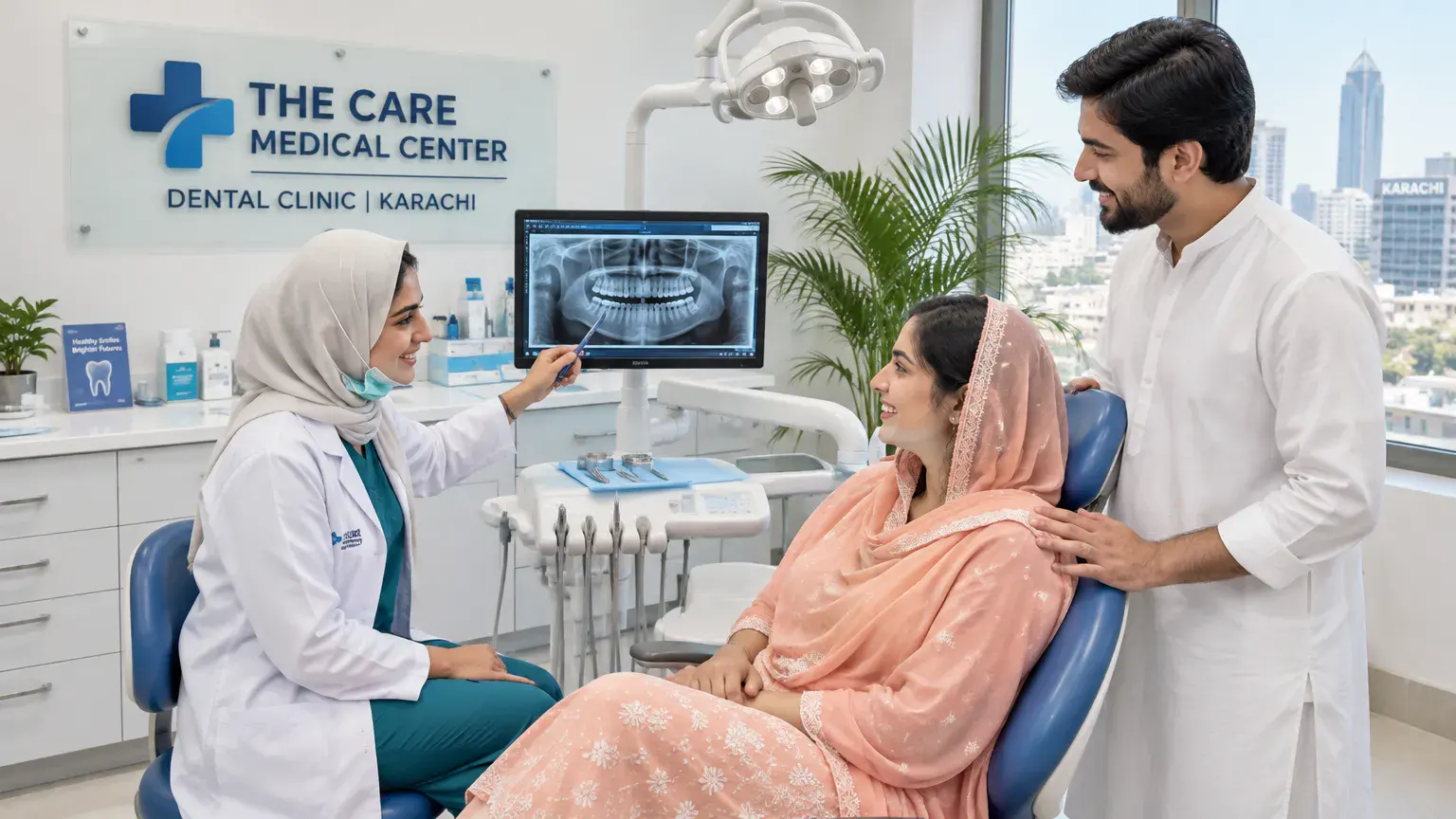
Let’s be honest: most of us in Karachi only search for a dentist when a tooth is already throbbing. Maybe it started as a little sensitivity with your morning chai. Maybe your gums bleed a bit when you brush, and you’ve been telling yourself it’s nothing.
We get it. Dental visits can feel scary, expensive or just hard to fit around work, school runs and Karachi traffic. But here’s the good news: a visit to the dentist is usually much simpler, quicker and gentler than people expect, and catching a problem early almost always means a smaller, cheaper fix.
In this guide, we’ll walk you through the signs that mean it’s time to book, exactly what happens at your first appointment, the most common treatments in plain language, and how to choose a dentist in Karachi you’ll actually feel comfortable with.
7 Signs It’s Time to See a Dentist
Your mouth usually gives you warnings before a small problem becomes a big one. If any of these sound familiar, it’s worth booking a check-up soon:
- Tooth pain that comes and goes. A twinge with cold water or sweet mithai often points to early decay or worn enamel.
- Bleeding or swollen gums. Blood in the sink when you brush is one of the earliest signs of gum disease, and it’s very treatable at this stage.
- Bad breath that won’t go away. If mouthwash only hides it for an hour, there may be plaque build-up, a hidden cavity or a gum infection.
- A chipped, cracked or loose tooth. Even if it doesn’t hurt, a crack can let bacteria in and get worse over time.
- Jaw pain or clicking. This can be linked to teeth grinding, often from stress or poor sleep.
- White or red patches, or a sore that doesn’t heal in 2 weeks. This needs a prompt check, especially if you have ever used paan, gutka, naswar or chhalia.
- It’s simply been more than a year. Most people don’t feel cavities in their early stages. A routine visit catches them before they hurt.
Go the same day if you have: swelling in your face or jaw, a fever with tooth pain, a knocked-out tooth, or bleeding that won’t stop. These are dental emergencies and shouldn’t wait for the weekend.
What Happens at Your First Dentist Visit?
Not knowing what to expect is half the anxiety. Here’s how a typical first appointment goes, step by step:
- A quick chat. Your dentist asks what’s bothering you, plus a few health questions: diabetes, blood pressure, pregnancy, allergies and any medicines (especially blood thinners). Bring your medicine list or a photo of it on your phone.
- The check-up. Using a small mirror and light, the dentist looks at every tooth, your gums, tongue and cheeks. It’s painless, and it takes a few minutes.
- An X-ray, if needed. Dental X-rays use a very low dose and show what the eye can’t, like decay between teeth or an infection at the root. Let the team know if you might be pregnant.
- Your treatment plan. This is where a good dentist slows down. You should hear what’s wrong, what your options are, roughly what each costs and what happens if you wait. Ask questions; there are no silly ones.
- Cleaning or quick fixes. Sometimes scaling and polishing or a simple filling can be done the same day. Bigger work, like a root canal, is usually booked as a separate visit.
Most first visits take about 30 to 45 minutes. If you’re nervous, tell the dentist at the start. Agreeing on a simple hand signal to pause makes a big difference.
Common Dental Treatments, Explained Simply
Dental words can sound intimidating. Here’s what the most common treatments really mean:
| Treatment | What it is | Usually needed when |
|---|---|---|
| Scaling and polishing | A professional clean that removes hardened plaque (tartar) your brush can’t | Gums bleed, breath smells, or it’s been 6 to 12 months |
| Tooth-coloured filling | Decay is removed and the hole is sealed with material matched to your tooth | A cavity is found early |
| Root canal treatment (RCT) | The infected nerve inside the tooth is cleaned out and sealed, so you keep your natural tooth | Decay has reached the nerve; pain is strong or lingers |
| Crown (cap) | A custom cover that protects a weak or root-canal-treated tooth | A tooth is cracked, heavily filled or treated with RCT |
| Extraction | Removing a tooth that can’t be saved, including stuck wisdom teeth | Severe damage, infection or crowding |
| Bridges, dentures and implants | Ways to replace missing teeth so others don’t drift | A tooth has been lost or removed |
| Teeth whitening | A dentist-supervised treatment to lift chai, coffee and smoking stains | You want a brighter smile |
| Braces and clear aligners | Gradually straighten crooked or gapped teeth | Crowding, gaps or bite problems |
A quick word on root canals: they have a scary reputation, but with modern local anaesthesia most patients say it feels like a long filling. The real pain usually comes from the infection before treatment, not the treatment itself.
You can see the full list of treatments on our dental services page.
How to Choose a Dentist Near You in Karachi
Search “dentist near me” in Karachi and you’ll get hundreds of results. Here’s a simple checklist to narrow them down:
- Check the qualification. Your dentist should hold a BDS (Bachelor of Dental Surgery) and be registered with the Pakistan Medical and Dental Council (PM&DC). It’s fine to ask.
- Look at hygiene, not just décor. Instruments should come out of sealed sterilised packs, and gloves and masks should be fresh for every patient.
- Notice how they explain things. A good dentist shows you the problem (on an X-ray or camera), gives options, and never rushes you into expensive work.
- Ask about cost upfront. Clear estimates before treatment starts mean no surprises at the counter.
- Think about location and timings. In Karachi traffic, a clinic you can reach in 20 minutes after work is one you’ll actually go back to for follow-ups.
- Read real reviews. Google reviews from local patients tell you a lot about waiting times, staff behaviour and comfort.
One more advantage worth considering: a multi-specialty centre. If your dentist spots something linked to diabetes, for example, gum problems that keep coming back, it helps to have a physician or diabetologist under the same roof.
Everyday Habits Karachi Smiles Need
Karachi life is tough on teeth: sweet doodh-patti several times a day, late-night snacking, fizzy drinks in the heat, and for some, paan or chhalia. A few small habits go a long way:
- Brush twice a day for 2 minutes with a fluoride toothpaste, and don’t skip the night brush.
- Clean between your teeth with floss or interdental brushes once a day.
- Drink plenty of plain water, especially in summer, and keep sugary drinks to mealtimes.
- Wait about 30 minutes after something acidic (like lemon soda) before brushing.
- Change your toothbrush every 3 months, or sooner if the bristles splay.
- If you use paan, gutka, naswar or chhalia, stopping is the single best thing you can do for your mouth, and regular dental checks help catch problems early.
When should children first see a dentist?
Around the first birthday, or when the first tooth appears. Early visits are short and friendly, help children get comfortable, and catch problems like bottle-feeding decay early. Milk teeth matter too: they hold space for adult teeth. If your little one needs a general check-up too, our child specialist in Karachi is in the same building.
Visit a Dentist in PECHS, Karachi at The Care Medical Center
If you’re looking for a dentist near Tariq Road, Bahadurabad, Nursery or Shahrah-e-Faisal, The Care Medical Center (TCMC) is right in PECHS Block 2. Our dental clinic offers check-ups, scaling, fillings, root canals, crowns, extractions, whitening, braces and children’s dentistry.
- Qualified dentists: our BDS-qualified dental team sees patients Monday to Saturday, 2:00 pm to 7:00 pm
- Everything under one roof: general physicians, diabetologists, child specialists, lab and pharmacy in the same centre
- Patients’ verdict: rated 4.9 on Google from 164 reviews
- Address: Society Office, Shop 1, Dr Asghar Qadir Street, Block 2, PECHS, Karachi (Google Maps)
Ready to book? Call (021) 34550021, WhatsApp 0345 0207939, or book your dental appointment online. Don’t wait for the toothache to decide for you.
Frequently Asked Questions
How often should I visit a dentist?
For most adults, every 6 to 12 months. People with gum disease, diabetes, braces or a history of frequent cavities may need to come more often. Your dentist will suggest the right interval for you.
Does a dental check-up hurt?
No. A routine check-up is just looking and gentle probing. If treatment is needed, the area is numbed with local anaesthetic first.
Is a root canal better than pulling the tooth out?
Usually, yes. Keeping your natural tooth helps you chew properly and stops neighbouring teeth from shifting. Your dentist will tell you honestly if a tooth can’t be saved.
Can I see a dentist during pregnancy?
Yes, and it’s encouraged, because pregnancy hormones can make gums more prone to bleeding. Tell the dentist you’re pregnant so they can plan safe treatment and timing.
What should I do for a toothache at night?
Rinse with warm salt water, take a regular painkiller you know is safe for you, and avoid very hot, cold or sweet food. Don’t put aspirin directly on the gum. Book a dentist as soon as possible; go to an emergency department if your face is swelling or you have a fever.
Where can I find a good dentist near me in PECHS?
The Care Medical Center’s dental clinic is in Block 2, PECHS, close to Tariq Road and Bahadurabad. Call (021) 34550021 or WhatsApp 0345 0207939 to book.
This article is for general information and isn’t a substitute for a personal dental examination.
